
Franchise accounting software that runs royalty collection on its own
A franchisee files the weekly sales report. Totals calculate, the royalty invoice generates, the payment records against it, and the P&L updates. No spreadsheet in the middle and nobody chasing numbers on the last Friday of the month.

Why manual royalty reconciliation fails without warning
It fails quietly, which is what makes it expensive. A location reports late and gets invoiced on last month's figure. A percentage lands on the wrong revenue line. Partial payment records in one place and not the other.
None of it triggers an alarm. All of it compounds, until an audit or a franchisee dispute surfaces eighteen months of it at once.
The finance cost is only half. The other half is that leadership can't see the network's real numbers without someone spending three days assembling them.
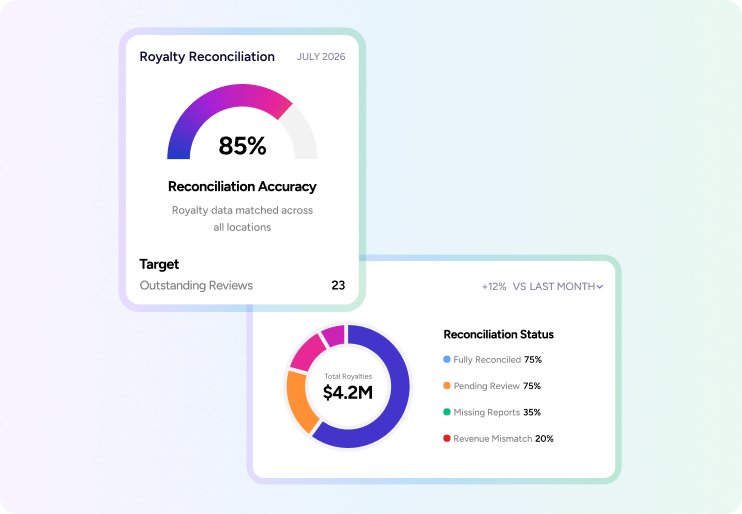
The royalty chain, from sales report to P&L

Weekly sales report submissions
Franchisees file on your cadence, in a structured format, from the environment they already work in. Supporting documents land in a sales documents repository against the same record.
Automatic calculation
Totals compute against that location's agreement terms.
Automated invoice generation
The royalty invoice generates from the calculated total. Nobody types it.
Payment recording
Payments record against the invoice, full or partial, across multiple methods, with the balance visible.
Weekly profit and loss statements
The finance dashboard and P&L update from the same data, weekly rather than at period close.
Billing events management and a financial dashboard with KPI panels sit across all five.
The chain runs on Power Automate flows deployed inside your own tenant. Financial data doesn't travel to a vendor cloud to be processed and come back.
Available as add-ons today: Stripe card payment integration, and accounting software integration scoped to your finance stack.
The AI financial analysis assistant
Finance dashboards tell you what happened. The assistant lets you ask why. Query the network's numbers in plain language — which locations are trending down, where royalty collection is slipping, how a region compares to last quarter — without waiting on someone to build a report.
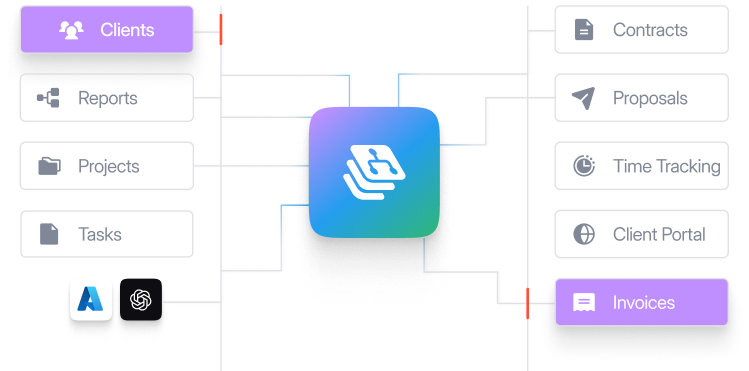
It runs on Azure OpenAI, connected only if you enable it.
The three questions your CFO will ask
What does it replace?
The manual sales report spreadsheets and the reconciliation work between them and your accounting system. It doesn't replace your general ledger. It feeds it.
Where does the data sit?
In your own Microsoft 365 tenant, under the security and access controls your IT team already administers.
What does it cost?
Complete Platform pricing starts at $750/month for up to 10 active locations, with Department Bundle pricing available based on the applications selected. See Pricing for the current model.